


Managing team conflicts effectively requires empathy, active listening, and collaboration. Here’s a quick summary of the strategies:
- Listen Without Interrupting: Give your full attention, avoid distractions, and let team members express themselves fully.
- See Through Others’ Eyes: Understand different perspectives by asking questions and practicing role reversal or structured dialogue.
- Accept and Acknowledge Feelings: Recognize emotions without dismissing them and turn emotional awareness into constructive action.
- Find Solutions Together: Use brainstorming, encourage idea-sharing, and work collaboratively to create actionable solutions.
- Speak with Care and Clarity: Use respectful, clear language, and organize your message to ensure mutual understanding.
- Build Trust Through Open Discussion: Create a safe space for honest conversations and establish clear guidelines for discussions.
- Apply Heart Leadership Principles: Use techniques like the Seven Pillars Framework to foster emotional intelligence and strengthen team dynamics.
How to Use Empathy Mapping for Conflict Resolution: A Step …
1. Listen Without Interrupting
Listening attentively helps build trust and encourages team members to share their thoughts and work toward solutions. It requires your full attention.
Start by creating a space free from distractions: silence notifications, choose a quiet setting, and focus entirely on the conversation. Show you’re engaged by maintaining eye contact and nodding occasionally, which helps create a sense of safety and respect.
Here are some tips for listening effectively, especially during conflicts:
- Keep your body language neutral. Stay open and avoid gestures that show impatience.
- Concentrate on understanding the speaker instead of planning your response.
- Use short phrases like "I see" or "go on" to show you’re following along without cutting in.
Avoid interrupting; let the person finish their thoughts. This not only helps resolve issues but also shows you value their perspective.
Sometimes, silence can be powerful. It gives space for reflection and makes others feel heard and appreciated.
2. See Through Others’ Eyes
Resolving team conflicts starts with understanding different perspectives. By fostering empathy, disagreements can become moments for growth and stronger team bonds.
Encourage open perspective sharing
When conflicts arise, create an environment where team members feel comfortable sharing their viewpoints. This can uncover concerns like resource limitations or implementation challenges that might not be immediately obvious.
Practice looking at the situation from all sides
Before jumping to conclusions, take a step back and consider the issue from various viewpoints. Ask yourself questions such as:
- What challenges might this person be dealing with?
- What information do they have that I might not?
- How could their role or responsibilities shape their perspective?
These questions can help you approach conflicts with greater understanding and empathy.
"Heart leadership fosters intuitive decision-making and a deeper understanding of one’s next steps in any complex environment." – Heart Leadership Institute Tapuat
Exercises to build perspective-taking skills
Here are some activities to help teams better understand each other:
- Role reversal: Have team members swap roles during discussions. Experiencing a colleague’s daily challenges can provide valuable insight.
- Structured dialogue: Set aside dedicated time for team members to share their thoughts in a safe, judgment-free space. This encourages open communication and helps prevent future issues.
- Reflection exercises: Encourage team members to take a moment to reflect inwardly before responding to conflicts. This can lead to more thoughtful and productive conversations.
Building strong relationships within the team naturally fosters empathy. This mutual understanding creates a foundation for solutions that work for everyone.
3. Accept and Acknowledge Feelings
Building on the idea of understanding perspectives, recognizing and validating emotions plays a key role in strengthening team dynamics.
Create a supportive emotional space
Acknowledging emotions shows respect for each individual’s experience, even if you don’t necessarily agree. When team members express frustration, anxiety, or concern, it’s important to validate their feelings before jumping into problem-solving. Avoid dismissive comments like "it’s not a big deal." Instead, respond empathetically by:
- Recognizing their frustration and clarifying your understanding
- Saying things like, "That sounds like a tough situation to be in", or "I appreciate you sharing how this impacts you."
Use emotional intelligence in conversations
Effective leadership often requires connecting on a deeper level. This means:
- Paying attention to non-verbal cues that may indicate emotional stress
- Allowing team members the time and space to process their feelings
- Responding with empathy before offering solutions
- Balancing understanding with maintaining professional boundaries
This approach can help turn raw emotions into valuable insights.
"Leaders who practice heart leadership create a more meaningful and resonant impact. They prioritize authentic connections, lead with empathy, and foster a heart-driven culture."
– Heart Leadership Institute Tapuat
Turn emotional awareness into constructive action
Recognizing emotions isn’t just about acknowledgment – it’s about using that awareness to drive positive outcomes. Leaders can:
- Use emotional intelligence to uncover the root of challenges
- Channel strong emotions into actionable solutions
- Build opportunities for deeper connection and understanding
This process encourages better decision-making and helps teams approach challenges with creativity and resilience.
sbb-itb-6cc8587
4. Find Solutions Together
After recognizing emotions, focus on working as a team to address concerns while strengthening relationships.
Use a clear brainstorming approach
Organize discussions to:
- Define the problem
- Ensure everyone has a voice
- Concentrate on forward-thinking solutions
- Assign tasks and responsibilities
This approach helps generate thoughtful and creative ideas.
Encourage open and empathetic idea-sharing
Fostering an environment where ideas flow freely involves:
- Creating a safe space for sharing unconventional thoughts
- Balancing intuitive decisions with logical analysis
- Building on each other’s ideas in a constructive way
- Keeping empathy at the forefront of discussions
Work toward team agreement
Using empathetic listening as a foundation, guide the group to find common ground by:
- Making sure everyone feels heard and the final decision is widely supported
- Testing solutions under various scenarios
- Setting clear steps for putting plans into action
Track progress effectively
Monitoring how solutions are implemented helps maintain the commitment made during brainstorming.
| Phase | Key Actions | Success Indicators |
|---|---|---|
| Initial Implementation | Document solutions and assign tasks | Everyone knows their responsibilities |
| Progress Monitoring | Hold regular check-ins and adjust plans | Noticeable improvements in teamwork |
| Long-term Integration | Embed successful practices into workflows | Ongoing positive results |
Strengthen the team through collaboration
Collaborative problem-solving not only addresses challenges but also builds stronger bonds and prepares the team for future obstacles. It leads to:
- Solutions that address deeper issues
- A more unified team through shared efforts
- Greater confidence in handling conflicts
- Improved adaptability for the organization
Finding solutions together isn’t just about fixing problems – it’s about creating a team that thrives on collaboration and connection.
5. Speak with Care and Clarity
Effective communication is at the heart of resolving conflicts. By combining empathy with clear messaging, you can turn tense situations into opportunities for understanding.
Choose Words Wisely
The way you phrase things matters. Keep these tips in mind:
- Use straightforward language to avoid confusion.
- Stay away from absolutes like "always" or "never."
- Frame your thoughts with "I" statements to express your perspective.
- Keep your tone respectful, clear, and assertive without being aggressive.
Organize Your Message
A structured approach ensures your message is clear and well-received. Here’s a helpful framework:
| Communication Element | Purpose | Example |
|---|---|---|
| Context Setting | Create a shared starting point | "I’d like to discuss the project timeline concerns." |
| Observation | Share facts without bias | "I noticed a three-day deadline delay." |
| Impact | Explain the effects respectfully | "This impacts our ability to meet client expectations." |
| Request | Suggest actionable steps | "Could we review the timeline together?" |
Practice Empathetic Communication
Empathy doesn’t mean losing professionalism – it’s about understanding others while staying focused. Balancing compassion with boundaries builds stronger connections and improves conflict resolution.
Encourage Genuine Dialogue
True clarity happens when conversations allow for honest exchange. To encourage this, try:
- Recognizing emotions while steering discussions toward solutions.
- Checking in to ensure mutual understanding.
- Adapting your communication style based on feedback.
- Staying patient, even during tough conversations.
"Arnaud’s teachings got me into places I would have never thought on my own. He’s helping me find my joy. It is rare that someone understands human condition as well as Arnaud." – Rob Angel
Balance Directness with Care
Addressing conflicts requires a mix of honesty and sensitivity. Here’s how to strike the right balance:
- Tackle issues promptly but choose a suitable time for discussion.
- Be specific about concerns while focusing on solutions.
- Acknowledge differing viewpoints without defensiveness.
- Follow up to confirm everyone is on the same page.
Clear and thoughtful communication lays the groundwork for resolving conflicts effectively. Next, we’ll dive into how trust can be built through open discussions.
6. Build Trust Through Open Discussion
Trust is a cornerstone of resolving conflicts effectively. By fostering open, honest conversations, teams can turn disagreements into opportunities for growth. This approach encourages deeper, more meaningful communication in future discussions.
Create a Safe Space for Dialogue
A sense of safety allows team members to voice their thoughts without hesitation. You can create this environment by:
- Acknowledging and respecting different perspectives
- Responding to concerns with understanding
- Keeping sensitive information private when necessary
- Encouraging and supporting honest conversations consistently
Focus on Meaningful Communication
Effective communication stems from genuine interactions. When leaders and team members communicate thoughtfully, open discussions become more productive and impactful.
Establish Clear Guidelines for Discussions
Setting clear expectations ensures that discussions remain constructive. Here’s how:
| Element | Purpose | Implementation |
|---|---|---|
| Timing | Provide structure | Schedule regular check-ins for open dialogue |
| Format | Promote fairness | Rotate facilitators and speaking opportunities |
| Follow-up | Ensure accountability | Record agreements and track progress |
| Safety | Build trust | Set clear rules for respectful communication |
Once these guidelines are in place, leaders can guide conversations more effectively.
Lead with Awareness
Strong leadership requires emotional awareness and the ability to navigate complex situations. Leaders who stay attentive during discussions can:
- Sense the mood of the room
- Address underlying issues early
- Steer conversations toward positive outcomes
- Balance emotional intelligence with problem-solving
Encourage Collaborative Problem-Solving
When trust is established, teams are more likely to approach challenges creatively. Support this by:
- Validating and acting on feasible ideas
- Creating spaces for brainstorming without judgment
- Encouraging experimentation and learning from outcomes
- Acknowledging and celebrating collaborative efforts
Stay Committed to Follow-Through
Trust isn’t built overnight. Consistent effort is key. Follow up on discussions promptly, keep the team informed, and celebrate progress when conflicts are resolved.
"In today’s ever-growing uncertainty, clarity is paramount. Heart leadership fosters intuitive decision-making and a deeper understanding of one’s next steps in any complex environment."
7. Apply Heart Leadership Institute Tapuat Methods
Heart Leadership Institute Tapuat methods offer structured, heart-focused strategies to handle conflict and encourage team development. These practices build on trust and communication, emphasizing empathy and effective techniques for resolving issues.
Use the Seven Pillars Framework
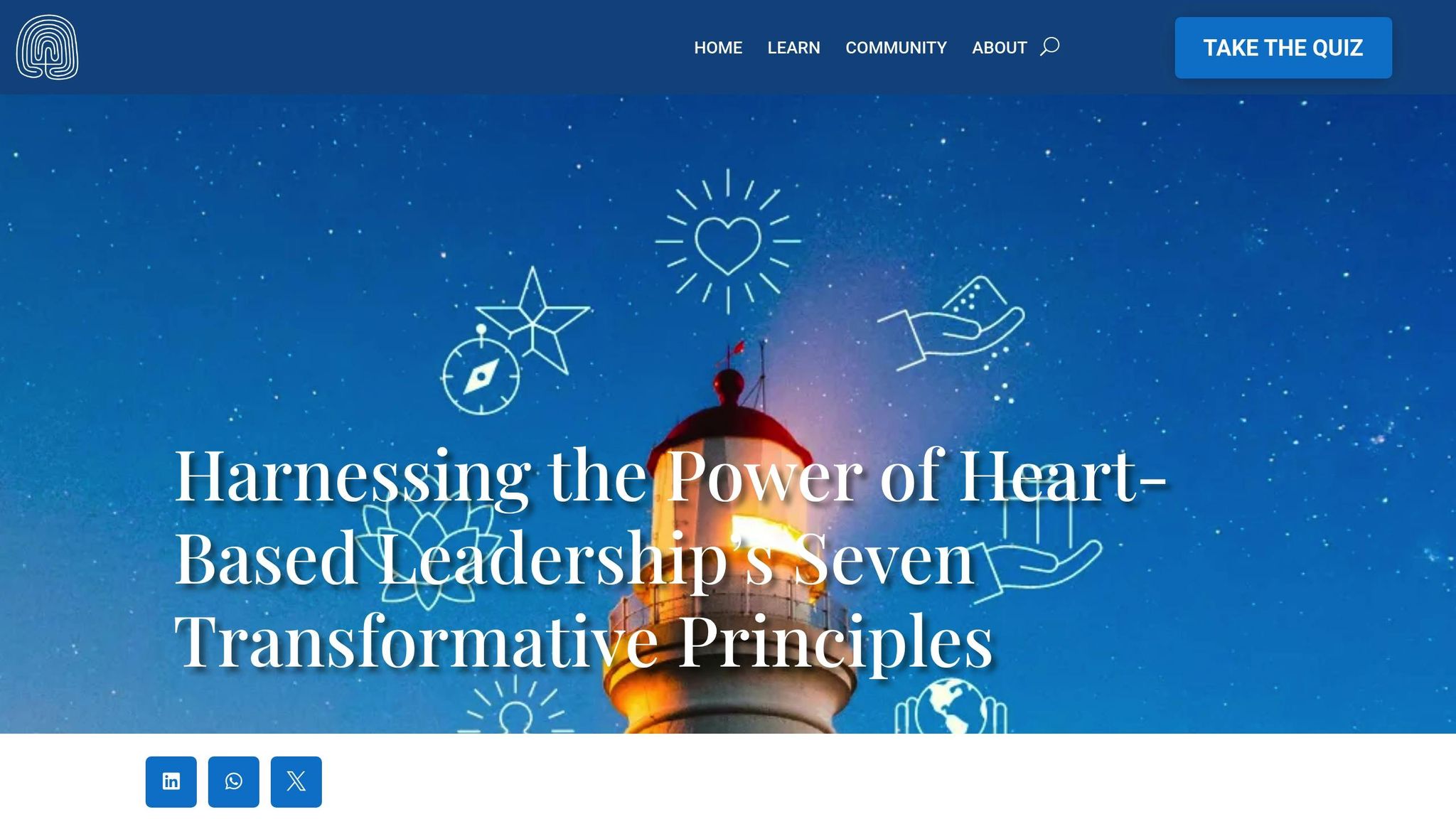
The Seven Pillars of Heart Leadership provide a clear roadmap for addressing conflicts:
| Pillar | How It Works | Benefits |
|---|---|---|
| Inner Peace | Creates calm spaces for dialogue | Lowers stress levels |
| Presence | Encourages full engagement | Improves understanding |
| Inner Joy | Promotes a solution-oriented mindset | Builds team resilience |
| Intuition | Assesses team dynamics effectively | Prevents conflicts early |
| Innovation | Brings in new ideas | Leads to better outcomes |
| Growth | Turns issues into learning moments | Strengthens the team |
| Impact | Creates meaningful changes | Ensures lasting improvements |
Strengthen Heart Intelligence
Heart intelligence equips leaders to manage emotional challenges with clarity. This approach reshapes how teams address disagreements, making outcomes more constructive and solutions more effective.
Enhance Intuitive Decision-Making and Build Genuine Connections
Heart-centered leadership involves understanding team dynamics and acting with empathy. Leaders can:
- Pinpoint concerns early to prevent escalation
- Choose the right time to address issues
- Facilitate open and productive conversations
- Build trust through consistent, empathetic actions
- Ensure emotional safety during tough discussions
Cultivate a Heart-Focused Work Culture
Incorporate heart-centered principles into everyday operations, treating conflict as an opportunity for growth. This mindset encourages teams to see challenges as a way to learn and improve.
"Arnaud’s teachings got me into places I would have never thought on my own. He’s helping me find my joy. It is rare that someone understands human condition as well as Arnaud"
Conclusion
Handling team conflicts with empathy isn’t just about solving issues in the moment – it lays the groundwork for long-term resilience. The methods discussed here show how empathetic leadership can turn tough situations into chances for team growth.
By applying these approaches consistently, leaders can create lasting change. Empathy in conflict management fosters an environment where creativity and genuine connections thrive.
The effects of empathy-driven conflict resolution go beyond individual disputes. When these strategies become part of everyday leadership, teams experience:
| Aspect | Immediate Benefit | Long-term Impact |
|---|---|---|
| Communication | Better understanding | Stronger trust and openness |
| Problem-solving | Smarter solutions | Greater team resilience |
| Team dynamics | Less friction | A more collaborative culture |
| Decision-making | More aligned decisions | Increased organizational agility |
These results highlight the broader approach we’ve outlined.
Effective conflict management through empathy requires regular effort. As teams face complex challenges, these practices can become second nature. The goal is to stay genuine while creating a space where emotional intelligence shapes decisions and problem-solving. Use these strategies to build a workplace rooted in empathetic leadership.
Related posts
- 5 Steps to Balance Empathy and Boundaries in Conflict
- How Leaders Use Stories to Resolve Workplace Conflicts
- How to Mediate Workplace Disputes with Empathy
- Using Emotional Intelligence to Turn Conflict Into Collaboration
Measure your own leadership coherence
The Heart Leadership Index is a structured self-assessment: 35 questions across seven pillars, about seven minutes, and your map is yours to read.
Take the HLI free