


Emotional intelligence (EI) is key to building trust in global teams. Leaders with strong EI are 60% more effective in cross-cultural settings because they understand and manage emotions, adapt communication, and foster psychological safety. Here’s why it matters and how it works:
- Why Trust Matters: Trust ensures collaboration despite cultural differences, like language barriers or varied workplace norms. Without it, misunderstandings can harm team performance.
- EI Skills That Build Trust:
- Empathy: Understand diverse perspectives.
- Self-awareness: Recognize personal biases.
- Emotional regulation: Respond thoughtfully to conflicts.
- Adaptive communication: Tailor messages for clarity.
- Cultural Differences: High-context cultures (e.g., Japan) value subtlety, while low-context ones (e.g., U.S.) prefer directness. Leaders must adjust their approach for each.
Research on EI’s Impact on Cross-Border Trust
What Studies Show About EI and Trust
Recent studies highlight how emotional intelligence (EI) plays a crucial role in helping leaders navigate cultural complexities and build genuine connections across borders. Leaders with high EI are better equipped to manage the emotional and cultural dynamics that arise in diverse environments, making them more effective in fostering trust.
Interestingly, EI and cultural intelligence (CQ) are shown to complement one another. While they share some foundational traits, each addresses unique aspects of intercultural interaction. This combination is especially important when managing diverse teams, where misunderstandings or emotional challenges can quickly strain trust if not handled effectively. Leaders who excel in both EI and CQ demonstrate greater flexibility in navigating cultural differences, leading to stronger team relationships and smoother conflict resolution.
These findings underline the importance of specific EI skills in building trust across cultures.
Key EI Skills That Build Trust
Building on this research, certain EI skills stand out as critical for fostering trust in cross-cultural settings:
| EI Skill | Impact | Application |
|---|---|---|
| Emotional Regulation | Prevents frustrations from escalating during cultural misunderstandings | Keeps relationships intact by managing negative reactions |
| Cultural Awareness | Helps interpret diverse behaviors accurately | Reduces the risk of unintentional offenses or missteps |
| Empathetic Response | Encourages understanding of different perspectives | Creates a sense of psychological safety for team members |
| Self-Management | Controls instinctive reactions to unfamiliar situations | Preserves leadership credibility across cultures |
Research emphasizes that these skills are even more effective when paired with cultural intelligence. For instance, EI helps leaders manage emotional frustrations in intercultural interactions, while CQ provides the tools to accurately interpret and respond to diverse behaviors. In more homogenous environments, EI alone can predict leadership success by influencing trust and likability. However, in multicultural contexts, the combination of EI and CQ becomes essential for establishing lasting trust.
Leaders who master these skills create inclusive environments where every team member feels valued and understood. This sense of mutual respect and understanding not only strengthens collaboration but also enhances global leadership effectiveness.
How Different Cultures Express Emotions
Emotion Expression Across Borders
How people express emotions can vary widely depending on cultural norms, and understanding these differences is key to fostering trust in global leadership. Studies reveal that collectivist and individualist societies have distinct ways of communicating emotions. In collectivist cultures, like those in East Asia and Latin America, emotional expression tends to be more restrained and focused on maintaining group harmony. For example, in Japanese business settings, it’s customary to maintain a calm and pleasant demeanor, even during disagreements. Openly showing anger, on the other hand, is generally seen as inappropriate.
In contrast, individualist cultures – common in North America and Western Europe – encourage a more direct and open display of emotions. These societies often place a higher value on authenticity and personal expression, even if it disrupts group dynamics.
| Cultural Context | Emotional Expression | Trust-Building Approach |
|---|---|---|
| High-Context (e.g., Japan, China) | Subtle, context-dependent | Focus on relationships and long-term connections |
| Low-Context (e.g., US, Germany) | Direct and explicit | Task-oriented with immediate feedback |
| Collectivist | Prioritizes group harmony | Trust built through group consensus |
| Individualist | Values personal authenticity | Trust built through reliability and openness |
These cultural norms also influence how conflicts are addressed, leading to distinct conflict resolution strategies.
How Different Cultures Handle Conflict
Cultural differences play a significant role in how conflicts are managed, and adapting to these differences requires emotional intelligence. In risk-taking cultures, like those in North America and parts of Europe, conflict is often seen as an opportunity for growth and innovation. These societies typically favor direct confrontation and open debates, even if emotions run high during disagreements.
On the other hand, risk-averse cultures, such as those in East Asia and the Middle East, approach conflict with more caution. They often rely on indirect communication, intermediaries, and strategies that help preserve social harmony. Emotional restraint is highly valued in these settings to avoid damaging relationships.
Leaders with strong emotional intelligence can navigate these cultural differences by adjusting their conflict resolution methods. For instance, in risk-averse cultures, they might use indirect communication or involve mediators, while in risk-taking cultures, they can engage in open and direct discussions. By respecting these cultural preferences, leaders create environments where team members feel heard and valued. This sense of psychological safety is essential for building long-term trust across diverse teams.
Steps to Build Trust Across Cultures
Reading Emotions in Different Settings
Building trust across cultures requires a sharp eye for emotional nuances and the ability to adapt. Leaders need to identify and interpret emotional signals that might differ from their own cultural norms.
Here’s how leaders can navigate this:
- Understand the Cultural Context
Knowing the cultural backdrop helps decode emotional signals accurately. For instance, in Japan, silence often reflects careful thought rather than disagreement or discomfort. - Pay Close Attention to Subtle Cues
Watch for shifts in body language, tone, or facial expressions. In some Asian cultures, disagreement might be expressed through silence or a slight change in expression, rather than open confrontation.
By mastering these emotional cues, leaders can set the stage for more effective communication and trust-building.
Creating Better Feedback Methods
Interpreting emotions is just the first step. Leaders also need to adapt their feedback styles to fit the expectations of different cultural groups. Tailoring feedback ensures it resonates and builds trust.
| Cultural Context | Approach | Style |
|---|---|---|
| Direct (e.g., US, Germany) | Be straightforward and specific | One-on-one, immediate feedback |
| Indirect (e.g., Japan, China) | Use face-saving techniques, like the "sandwich" method | Indirect, often involving intermediaries |
Using the Heartful Method for Team Trust
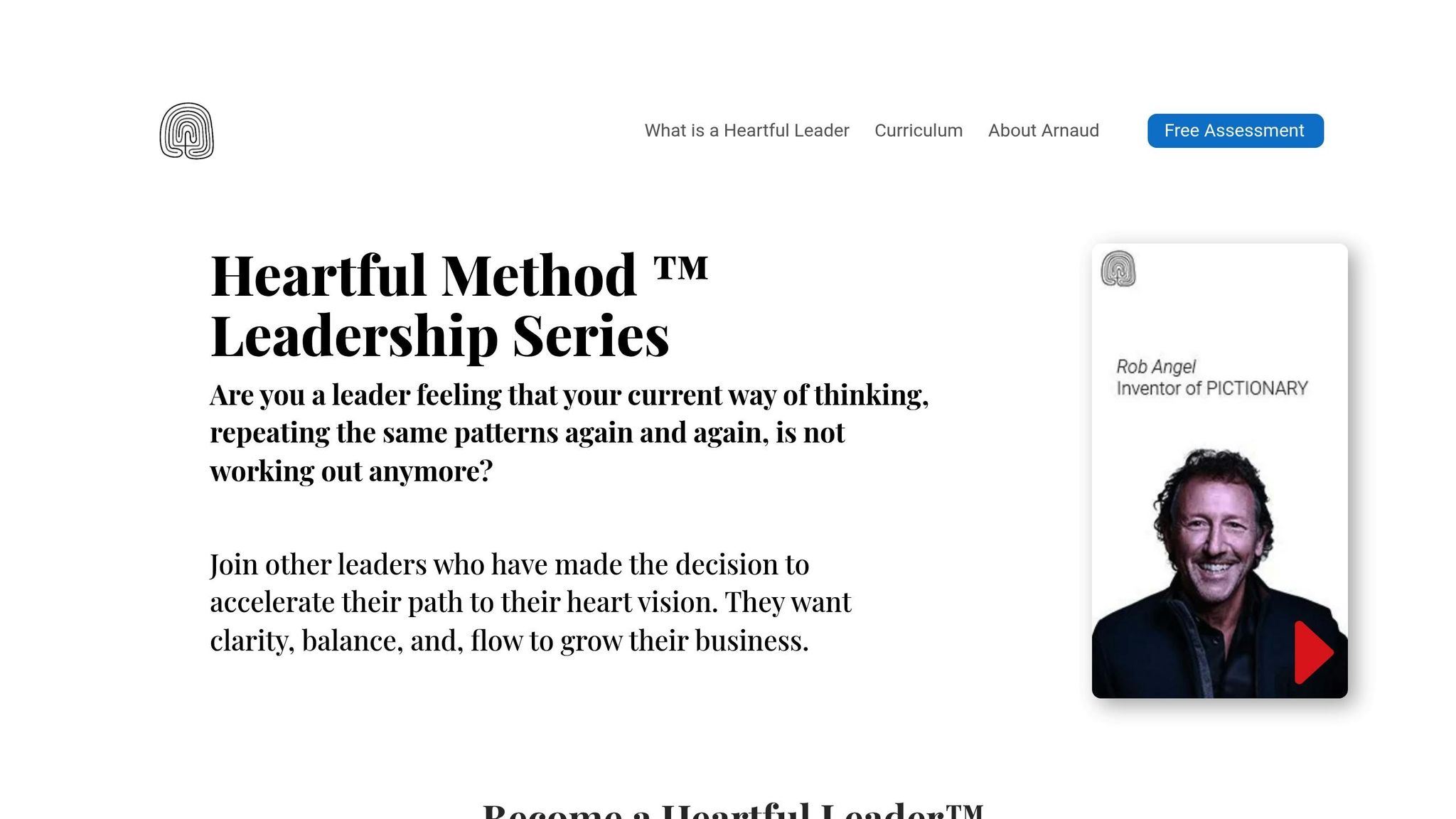
The Heartful Method offers a structured way to strengthen trust in cross-cultural teams by leveraging emotional intelligence. It focuses on self-awareness, empathy, and adaptable communication, helping leaders connect more meaningfully across cultural divides.
"What previously felt like rowing now feels increasingly like sailing. I was able to find my voice as a leader and motivate the team better than ever – leading us to a great year with lots of highlights and amazing growth."
– Nodar Daneliya, co-founder @Shuttle.rs
This approach centers on three main areas:
- Self-awareness: Recognizing your emotional reactions and cultural assumptions.
- Empathetic Connection: Gaining a deeper understanding of team members’ cultural perspectives.
- Adaptive Communication: Shaping your leadership style to align with the cultural preferences of your team.
Leaders who develop both emotional intelligence and cultural sensitivity are better positioned to create trust and harmony within diverse teams.
sbb-itb-6cc8587
Why Cultural Competence and Emotional Intelligence Go Hand in Hand
Conclusion: EI’s Role in Global Leadership Success
Emotional intelligence plays a crucial role in fostering trust across cultures. Research highlights that leaders with high emotional intelligence are 60% more effective in navigating cross-cultural environments.
In global leadership, emotional intelligence and cultural intelligence work hand in hand, empowering leaders to:
- Recognize and interpret subtle emotional cues in diverse cultural settings
- Manage their reactions to unfamiliar behaviors with sensitivity
- Build genuine relationships with team members
- Create an environment where trust and inclusion thrive
These skills provide a strong foundation for practical strategies to integrate emotional intelligence into leadership practices.
One such strategy is the Heartful Method, which demonstrates how emotional intelligence can reshape cross-cultural leadership. By focusing on self-awareness and empathy, this method enables leaders to create meaningful connections that transcend cultural boundaries. As Rob Angel, the creator of PICTIONARY, shares:
"Arnaud’s teachings got me into places I would have never thought on my own. He’s helping me find my joy. It is rare that someone understands human condition as well as Arnaud."
Looking ahead, the demands of global leadership extend far beyond technical skills or business expertise. The ability to bridge cultural divides through emotional intelligence is essential. Leaders who invest in developing these capabilities will be better equipped to achieve lasting success in our interconnected world.
FAQs
How does emotional intelligence help leaders build trust in culturally diverse teams?
Emotional intelligence is essential for building trust in cross-cultural teams. It helps leaders navigate the complexities of differing communication styles, values, and expectations. Leaders who excel in emotional intelligence are better equipped to understand and regulate their own emotions while empathizing with others. This paves the way for mutual respect and deeper understanding.
When leaders actively listen, show genuine interest in diverse perspectives, and adjust their behavior to align with various cultural norms, they create stronger relationships within the team. This approach not only improves collaboration but also fosters an environment where every team member feels valued and respected, no matter their cultural background.
How can leaders enhance emotional intelligence and cultural awareness to build trust and improve team collaboration?
Leaders can strengthen emotional intelligence (EI) and cultural intelligence (CQ) by honing self-awareness, practicing empathy, and being open to different perspectives. Start by examining your own biases and emotional responses – this helps you understand how they shape your interactions with others. Make a conscious effort to actively listen to your team, acknowledging their viewpoints to build trust and a sense of belonging.
When it comes to cultural understanding, invest time in learning about the values, traditions, and communication styles that shape the diverse backgrounds within your team. Encourage honest conversations and create an environment where everyone feels safe sharing their experiences. By blending emotional intelligence with an appreciation for cultural differences, leaders can nurture stronger connections and foster a more united, productive team.
How does understanding cultural differences in emotions and conflict resolution improve team management?
Understanding how emotions are expressed and conflicts are handled across different cultures is key to leading a diverse team successfully. Leaders with strong emotional intelligence can identify and respect these differences, helping to build trust and encourage collaboration.
When leaders are mindful of diverse communication styles and approaches to resolving disputes, they can cultivate an environment where everyone feels heard and appreciated. This inclusivity strengthens team relationships and promotes more effective problem-solving and creativity by leveraging a variety of perspectives.
Related posts
- The EQ Advantage: 5 Ways It Fuels Leadership Motivation
- Emotional Intelligence for Resilient Leadership
- How Emotional Intelligence Improves Team Resilience
- Heart Leadership: Emotional Intelligence in Teams
Measure your own leadership coherence
The Heart Leadership Index is a structured self-assessment: 35 questions across seven pillars, about seven minutes, and your map is yours to read.
Take the HLI free